Saturday, January 13, 2018

Splitter VII

“In the morning we made love, just to reassure ourselves that the passing of my father hadn't broken the gears of the universe, that though the light might look less bright and the angles a little sharper, he had left the world more or less as he'd found it for those who'd survived him.” 
(Kealan Patrick Burke - Midlisters)

Tuesday, January 9, 2018

Most Disturbing Books II

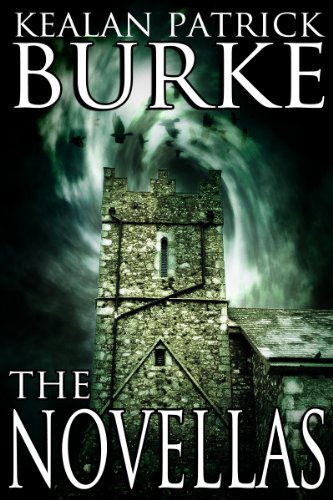
While on my Kealan Patrick Burke reading spree (that included the wonderful novella 'Sour Candy'), I discovered another book that disturbed me pretty much - albeit differently than 'Blanky' did. It's a novella called 'The Tent', and it's included in a collection of three other novellas (simply called 'The Novellas'):


This collection is the only way to get it on paper, because the novella alone is only available as an ebook


'The Tent' is a scary and repulsive story that somehow hit a nerve with me, and it's about... well, I can't really say anything more about it without spoilers, so let me say at least this: the light and warmth of the eponymous tent might be deceptive.
Burke is able - as always, it seems to me - to draw you in, deeply, and as soon as that happens, you will not get out easily. Some images of this novella will definitely haunt you. His writing style is - again, as always - concise, short, limited to the necessary, yet imaginative and atmospheric. 
Kealan Patrick Burke knows how to really frighten you - which is a rare trait in horror literature these days. And an even rarer trait is to surprise you: you will not know what's really happening until it's too late - for the protagonists. And for you.

Thursday, January 4, 2018

Most Disturbing Books I

This is a list of the most disturbing books I have read. And by this I mean works of fiction (short stories, novellas, short novels, novels) that kept me awake at night and left images I remember long after. I am just starting to compile the list, so it will be updated regularly. And of course I am open for recommendations! 


Nathan Ballingrud - The Visible Filth
 
A deeply unsettling read, almost from the get go. The novella does what good horror fiction (at least in my opinion) should do: Make you feel safe while at the same time slowly pulling the rug away from under you, fiber by fiber, increasingly blurring the line between real and surreal - until you finally see that gaping hole underneath your feet that you are gonna fall into now. Like his  marvelous - and recommendable - short story collection 'North American Lake Monsters', 'The Visible Filth' shows that Nathan Ballingrud is a unique voice in modern horror literature. 


Kealan Patrick Burke - Blanky

What starts as a tragic story of loss, told from the perspective of a grieving father whose daughter has died just months after her birth (no spoiler here, you learn this on the first two pages), soon develops into pure and relentless horror with a deeply psychological and symbolic subtext. Kealan Patrick Burke doesn't say a word too much, and still manages to make his first person narrator almost painfully believable in his sadness, his hope, and ultimately his sheer terror. (Shout-out to Edward Lorn for his recommendation.)

Monday, January 1, 2018

Splitter VI

“History is something that very few people have been doing while everyone else was ploughing fields and carrying water buckets.” 
(Yuval Noah Harari - Sapiens)

Sunday, December 31, 2017

Splitter V

“Give man a choice between reality and loneliness or fantasy and community, he'll pick having friends every time.” 
(Joe Hill - Rain; in: Strange Weather)

Tuesday, April 4, 2017

Splitter IV

“Our Society, which seems so sturdily built out of concrete and custom, is just a temporary resting place, a hotel our civilization checked into a couple hundred years ago and must one day check out of. It's an inevitability tourists can't help but realize when visiting Mayan ruins, Egyptian ruins, Roman ruins. How long will it be before someone is visiting American ruins?” 
(Neil Strauss - Emergency)

Sunday, April 2, 2017

Splitter III

"The truth was, she hadn't felt much like a cop in a long time. That was a place she never thought she'd get to. Be just like the rest of them after ten years. Angry and drunk. Numb to pretty much everything. That wasn't supposed to be her. But she now knew what they all knew: that the very thing you need to stay strong and keep your head, that daily and deliberate apathy you practice like meditation, is the very thing that, in the end, robs you of your desire to get in the car and catch bad guys. Nobody tells you that, once you put on the armor, you can never take it off." 

(Scott Frank - Shaker)

Monday, March 27, 2017

Splitter II

"[Federal prisons] are dreadful institutions whose procedures are designed to dehumanize the people they contain. And when you look at our rates of incarceration - roughly seven times higher than those of our peer nations, higher even then the Soviet Union under Stalin - you can't help but feel there is something wrong with a society that feels the need to lock so many of its citizens in cages." 

(Brad Parks - Say Nothing)

Friday, March 24, 2017

Splitter I

"Security was a myth, a grand lie we told ourselves to mask the jarring reality of the human condition: that the social contract was written in sand, not stone, and it could be blown away at any time, by anyone with sufficient breath his lungs." 

(Brad Parks - Say Nothing)

Tuesday, September 8, 2015

Neue alte Heiligenverehrung

In der ersten Staffel der Netflix-Serie 'Narcos' gibt es eine Szene, die in der Wohnung einer armen kolumbianischen Familie spielt. 
An der Wand hängt ein Bild des Drogenhändlers Pablo Escobar, auf dem Escobar aussieht wie ein Heiliger. Entsprechend spöttisch wird das Bild von DEA-Agenten kommentiert. 
Wenn man sich dieser Tage in Berlin umschaut, kommt man allerdings kaum umhin, mit einer neuen Art dieser Heiligenverehrung konfrontiert zu werden:

Tuesday, November 30, 2010

Hitchens bei BBC Newsnight Special

Ein gleichermaßen faszinierendes wie bestürzendes aktuelles Interview mit dem kahlköpfigen - weil vom Krebs befallenen - Christopher Hitchens, Autor von God Is Not Great:


Sunday, November 28, 2010

Konversion = Selbst-Versklavung?

Die Konversion von Tony Blairs Schwägerin Lauren Booth zum Islam ist Anlass für Herbert Londons klugen Artikel auf pajamasmedia.com, in dem er seufzend die Frage aufwirft, aus welchen Gründen sich Bürger westlich-säkularer Gesellschaften - zumal Frauen - entscheiden, Muslime zu werden:
"Some poor souls unable 'to find themselves' seek refuge in self-selected slavery. They are prisoners of their own vision. The West they see is morally bankrupt; Islam may be violent and harsh, but it does prescribe moral parameters. [...] what converts often confuse is culture and religion. The warmth a family confers is not the same as the demands of religious obedience."

Saturday, November 20, 2010

Unbekannte Frucht

Ein mysteriöses, nie zuvor gesehenes Etwas, unklar ob Tier ob Pflanze oder überhaupt irdischen Ursprunges, ward D.V. von ihrer Freundin S. übergeben und offenbarte sich nun, auf dem Tisch vor uns liegend, unserem neugierigen Blick:


Da niemand so recht wusste, was tun, griff ich beherzt zum Messer und schnitt das kugelige Wesen in steter Erwartung eines Schmerzensschreies beherzt entwzei, derweil D.V. mutmaßte, es handle sich bestimmt "um eine Art Orange", was von A.A.S. mit skeptisch hochgezogenen Brauen und der Erwiderung "Klar, deshalb ist es ja auch grün!" erwidert wurde.
Kaum aufgeschnitten, offenbarte sich uns ein blässlich grünes Inneres, kontrastiert durch ein helles Zentrum, dem ein milchig-weißer Saft entschleimte:


Jedoch brachten weder der leicht holzige Geruch noch die Fingerprobe weitere Erkenntnisse, abgesehen vom extrem klebrigen Charakter der Flüssigkeit, so dass guter Rat teuer war.
Aber wie findet man über eine Internetsuche eine Frucht, die man nur gesehen hat? Schlicht wie ich bin, wusste ich mir zunächst nicht anders zu helfen, als bei Google "unbekannte Frucht" einzugeben, und siehe da: schon die erste Seite der Bildersuche zeigte unseren neuen Freund. Des Rätsels Lösung: es handelt sich um eine Milchorange, die Frucht vom...
"...Milchorangenbaum (Maclura pomifera), auch Osagedorn genannt, [...] eine Laubbaumart aus der Gattung der Maclura in der Familie der Maulbeergewächse (Moraceae). [...]
Das ursprüngliche Verbreitungsgebiet des Osagedorns im Grenzgebiet von Texas, Arkansas und Oklahoma war zugleich auch das Siedlungsgebiet des Indianerstamms der Osage, nach denen der Baum benannt wurde. Als Ausgangsmaterial für die Herstellung von Bögen wurde das Holz schon damals von den Indianern über das natürliche Verbreitungsgebiet hinaus gehandelt.
Die dornigen Bäume wurden früher als Hecken gepflanzt, um Rinderweiden zu umfrieden. Solange es noch keinen Stacheldraht gab, war Osage der 'lebende Zaunpfahl' für viele weiße Farmer, da sich der mit stacheligen Zweigen ausgestattete Baum ausgezeichnet zum Anpflanzen undurchdringlicher Hecken eignete. Diese Praxis endete erst mit der Einführung des Stacheldrahts. Das Holz wird aber heute noch für Pfosten und Zaunpfähle verwendet, da das Kernholz noch mehr als das der auch für diesen Zweck verwendeten Eichen enorm schädlingsresistent und witterungsbeständig ist.

(Quelle: Wikipedia.de)
Womit D.V. mit ihrer Orangenhypothese jedenfalls dem Namen nach Recht behalten hat. Respekt an die Botanikerin!

Thursday, November 18, 2010

Der Bruder des Schweigens

Der Blick über den Tellerrand schärft den Blick für die eigene Rechtsordnung. Hierzulande lernt man beispielsweise schon im ersten Semester Jura, dass Schweigen keine Willenserklärung und erst recht keine Zustimmung darstellt. Ganz im Gegensatz dazu folgendes arabisches Sprichwort, das ich heute entdeckt habe:
".السكوت أخو الرضا"
(Das Schweigen ist der Bruder der Einwilligung.)
Inwieweit dies in den Rechtsordnungen arabischer Länder auch rechtliche Geltung hat, weiss ich nicht. Aber die Existenz des Sprichworts spricht bereits für sich.

Tuesday, November 16, 2010

Ein Druckerzeugnis IV

Auf der Toilette sitzend kann man die Kleinanzeigen der zitty am besten lesen. Und sich darüber wundern, was die Klavierlehrerin wohl meint, wenn sie schreibt:
"Auch Menschen mit Notenaversionen sind willkommen."
Was, zum Teufel, sind denn bitte Notena-Versionen? zermartere ich mein Resthirn, bevor mir aufgeht, dass tatsächlich Noten-Aversionen gemeint sind.
Unfassbar, diese Leute mit ihren Bindestricha-Versionen...

Friday, November 5, 2010

Bonaparte - Too Much

Das ist ein richtiger Knaller (und wäre er von mir, ich würde ihn B.J. widmen!):